
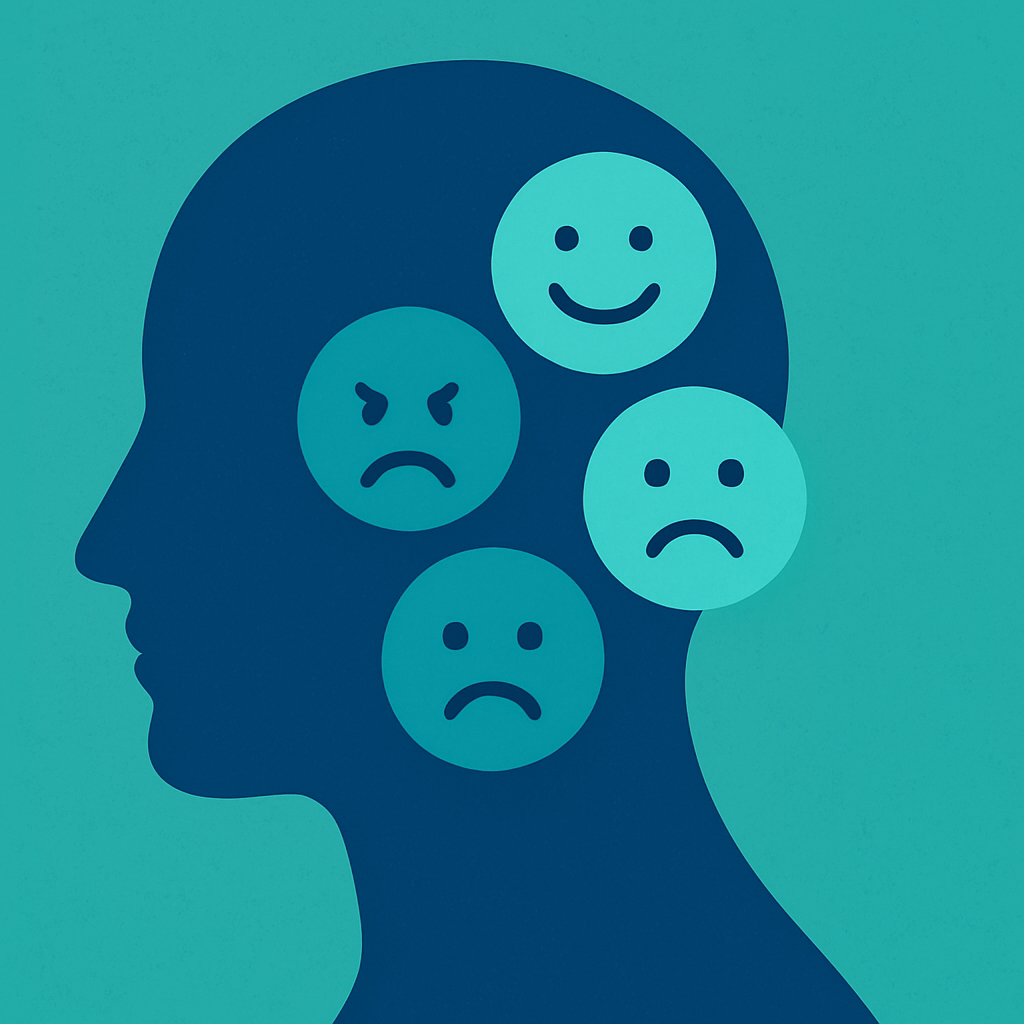
One of the most important foundations of Cognitive Behavioural Therapy (CBT) is understanding the powerful connection between our thoughts, emotions and behaviours.
The Cycle of Thoughts and Feelings
Have you ever noticed how a single thought can completely change the way you feel?
- You might think, “I’m not good enough”, and suddenly feel anxious or low.
- Or you might think, “I can handle this”, and feel calmer, more confident, and even hopeful.
Our thoughts and emotions are closely linked. The way we interpret a situation often shapes how we feel about it. And those feelings, in turn, can influence how we behave.
A Simple Example
Imagine you send a message to a friend and they don’t reply.
- Thought: “They’re ignoring me… I must have upset them.”
- Emotion: You feel hurt, rejected, or worried.
- Behaviour: You might withdraw, avoid reaching out again, or spend the evening ruminating.
But what if you thought instead:
- Thought: “They’re probably busy… I’ll hear back later.”
- Emotion: You feel relaxed, patient, maybe even understanding.
- Behaviour: You carry on with your day.
The situation is the same, but your thoughts change how you feel and respond.
Why This Matters
Recognising this link is a powerful first step. It means that by becoming more aware of our thoughts and learning to question or reframe them, we can influence our emotional well-being. CBT provides practical tools to help us do just that:
- Identifying unhelpful thought patterns
- Challenging automatic negative thoughts
- Building healthier, more balanced perspectives
CBT isn’t about positive thinking
CBT doesn’t ask you to replace every difficult thought with a positive one. Instead, it helps you examine whether your interpretation of a situation is accurate, helpful and balanced. Sometimes a difficult thought is entirely understandable. The aim is to become more aware of automatic patterns and develop more flexible ways of responding.
Moving Forward
In future posts, I’ll be sharing more about how CBT techniques can help you manage stress, anxiety, low mood, and the everyday challenges of life.
For now, I invite you to simply start noticing your thoughts. Next time you feel a strong emotion, pause and ask yourself:
- What went through my mind just then?”
- Is there another way of looking at this?”
Small steps in awareness can lead to big changes over time.
Thank you for joining me on this journey. I look forward to exploring more together.
Learning more about CBT
Understanding the relationship between thoughts, feelings and behaviours is just one part of CBT. If you’d like to understand the approach in more detail, read What is CBT?, or explore the CBT Knowledge Centre for guides covering anxiety, panic, health anxiety, social anxiety and other difficulties.
Written by: Natasha Lansley-Bryant, BABCP Accredited Cognitive Behavioural Therapist